Mold remediation — Las Vegas, NV
Mold Remediation in Las Vegas: Yes, Mold Grows in the Desert
Last updated: September 2026
The most expensive mold myth in Las Vegas is "it's too dry for mold here." Outdoors, true. But mold doesn't grow outdoors — it grows in wall cavities, under cabinets, above ceilings and inside HVAC systems, exactly where a slab leak, AC condensate overflow or monsoon intrusion leaves moisture. In a sealed, air-conditioned house, those cavities stay wet for weeks.
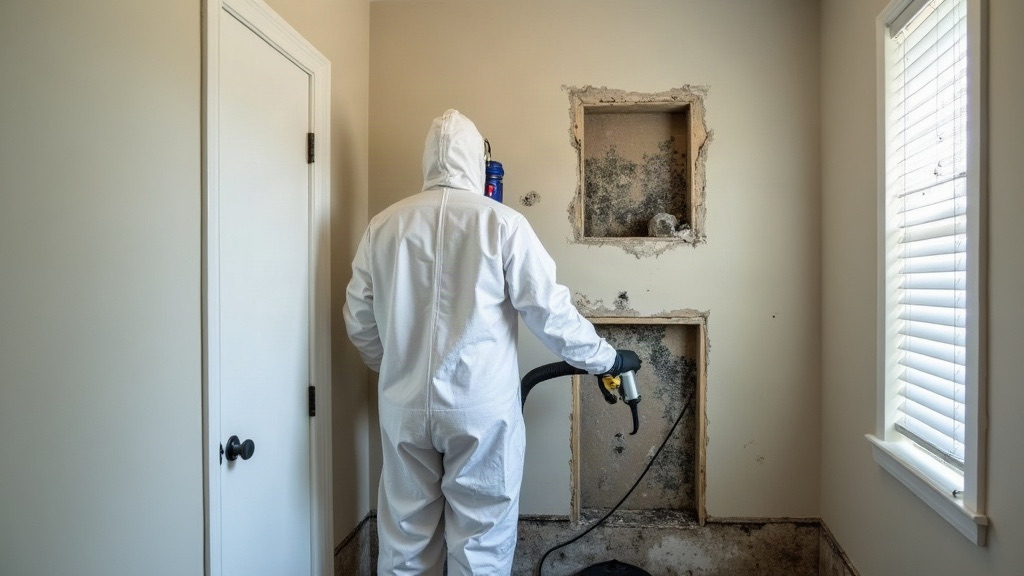
Proper remediation follows the IICRC S520 standard: contain the area, filter the air with HEPA, remove contaminated porous material, treat, and fix the moisture source — in that order. Spraying bleach on drywall is not remediation. Below: what it costs, how the work should look, and who does it in Las Vegas.
Quick answer
Mold remediation in Las Vegas typically costs $500–$4,000 for a contained area (a bathroom wall, under a sink, one ceiling section) and $10,000–$30,000+ for whole-house contamination. The desert doesn't prevent mold — it hides it: growth happens inside wall cavities after leaks, where dry outdoor air never reaches.
Mold Remediation Cost Snapshot
Contained single-area remediation (under 100 sq ft): $500–$4,000. Multi-area or HVAC-involved: $2,000–$8,000. Whole-house or long-neglected contamination: $10,000–$30,000+. Third-party testing before/after adds $300–$800 and is worth it on any job over a few hundred dollars. Ranges are compiled from national cost data plus published Las Vegas–area pricing, September 2026. Every job is scoped on site — treat these as planning numbers, not quotes.
Where Mold Actually Hides in Las Vegas Homes
The valley's leak profile writes the mold map: wall cavities above slab leaks (water wicks up into the bottom plate and insulation), ceiling assemblies under rooftop AC units whose condensate lines clog mid-summer, under-sink cabinets after supply-line drips, and HVAC air handlers in garages that sweat through June–September. Swamp coolers — still common in older neighborhoods — add a constant moisture source most Las Vegas guides ignore.
Signs before you ever see a spot: a musty smell when the AC kicks on, baseboards swelling or separating from the wall, paint bubbling in a stripe a foot above the floor (classic slab leak), and allergy symptoms that improve when you leave the house. Visible mold is the late stage, not the first stage.
What S520-Standard Remediation Looks Like
Assessment and containment. The work area gets sealed with poly sheeting and put under negative air pressure so spores don't migrate to clean rooms. If a company skips containment to save you money, it's spending your money on the next problem.
Removal, not killing. Dead mold is still an allergen. Contaminated drywall, insulation and carpet come out in sealed bags; framing is HEPA-vacuumed and wire-brushed or media-blasted; only then are antimicrobial treatments applied. "Fog and go" — spraying biocide without removing material — doesn't meet the standard.
Fix the source or it comes back. Remediation without moisture correction is a subscription. The scope should name the moisture source (slab leak, condensate line, intrusion point) and its repair, or refer you to the trade that fixes it. Post-remediation verification — ideally by a third party, not the remediator — confirms the job.
Desert-Specific Mold Mistakes
"It dried on its own." Las Vegas air dries surfaces fast and cavities never. The surface test — touching the wall — tells you nothing about the insulation inside it.
Running the AC to "dry it out." If the moisture is in or near the air handler, you just built a spore distribution system. Turn the affected zone off until it's assessed.
Bleach on porous surfaces. Bleach's water content feeds mold roots in drywall while the surface looks clean. It's the right tool on tile, the wrong one on gypsum.
Frequently asked
questions
Yes — indoors. Mold needs moisture, and Las Vegas homes generate it: slab leaks, AC condensate, swamp coolers and appliance failures. The desert dries your lawn, not the inside of your wall cavities, which is where remediation happens.
A contained area (under ~100 sq ft) typically runs $500–$4,000. HVAC involvement or multiple areas push $2,000–$8,000, and whole-house contamination reaches $10,000–$30,000+. Our mold cost page breaks down line items.
If mold is visible, testing to confirm it exists is usually wasted money — spend it on remediation. Testing earns its cost as post-remediation verification, ideally by a third party independent of the company doing the work.
When mold results from a covered sudden event (a burst pipe), remediation is usually covered up to a mold sublimit — often $5,000–$10,000. Mold from a long-neglected leak is typically excluded. The cause, not the mold, decides coverage.
Usually yes for a single contained area with proper negative-pressure containment — that's what containment is for. Whole-HVAC or whole-house contamination may require staying elsewhere for a few days.
Talk to a Las Vegas Mold Specialist
Available 24/7 — speak with a local specialist now.
Call (725) 705-7026This site is a directory, not a restoration company. See how we work and our privacy policy.