Sewage cleanup — Las Vegas, NV
Sewage Cleanup in Las Vegas: the One Water Job That's Never DIY
Last updated: September 2026
A sewage backup is not a bad smell and a mop — it's a biohazard event in your living space. Everything porous the water touched is contaminated waste, and in Las Vegas summer heat, bacterial growth in contaminated material accelerates hard. This page covers safety, cost and the companies equipped for it.
Quick answer
Sewage backup cleanup in Las Vegas typically costs $2,000–$10,000 ($7–$14 per sq ft) because porous materials — carpet, pad, drywall, insulation — must be removed and disposed, not dried. Category 3 water carries E. coli, hepatitis and parasites: stay out of the affected area and call a professional.
Sewage Cleanup Cost in Las Vegas
Small contained backup (one bathroom): $2,000–$4,000. Multi-room or whole-floor events: $4,000–$10,000+, plus rebuild. Per square foot, Category 3 mitigation runs $7–$14 — roughly double clean-water rates — because disposal and sanitization replace drying. Ranges are compiled from national cost data plus published Las Vegas–area pricing, September 2026. Every job is scoped on site — treat these as planning numbers, not quotes.
Why Sewage Backups Happen in Las Vegas
The valley's older neighborhoods — Spring Valley, the near-Strip corridors, central Las Vegas — have aging drain laterals stressed by hard-water scale and decades of use. Desert soil that expands with monsoon saturation and contracts in drought shifts underground connections over time. And the classic valley event: a main-line clog meets a household running AC condensate, laundry and showers simultaneously.
The warning signs before a full backup: multiple drains gurgling at once, water appearing in a shower when the washing machine drains, and a sewage smell at the lowest drain in the house. That combination means the main line — stop running water and call a plumber before it becomes a restoration job.
What Professional Category 3 Cleanup Involves
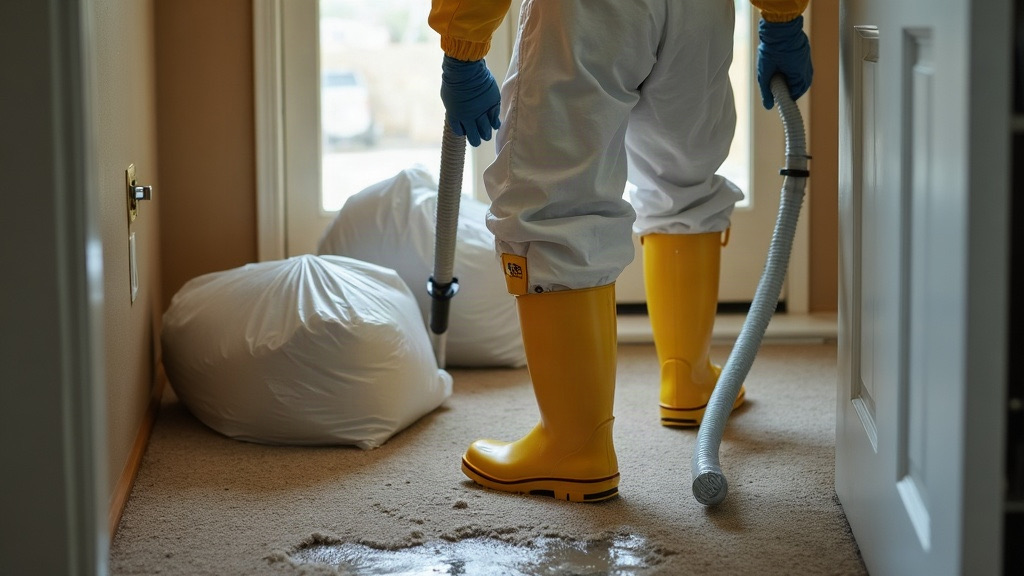
Extraction and removal. Standing sewage is pumped out; contaminated carpet, pad, drywall (typically to 12–24 inches above the water line) and insulation come out in sealed disposal. This material cannot be "cleaned" — it's waste.
Sanitization. Remaining surfaces get EPA-registered antimicrobial treatment; the area is contained to prevent aerosolizing contamination into clean rooms. Technicians work in PPE — which tells you what the air in that room contains.
Drying and verification. Only after removal and sanitization does structural drying begin. The source repair — the clogged or broken line — is a plumbing job that must precede or accompany cleanup, or it recurs.
Health Rules While You Wait
Keep everyone — especially children, elderly household members and pets — out of the affected area entirely. Don't run the HVAC if the event is anywhere near returns or the air handler; you'll distribute aerosolized contamination house-wide. Don't attempt bleach-and-mop cleanup on porous materials: you can't sanitize carpet pad.
If anyone must briefly enter (to shut off water, for example), rubber boots and gloves, no skin contact, and clothes go straight to a hot wash. Then let the professionals take over.
Frequently asked
questions
Only if you carry a water/sewer backup endorsement — standard policies exclude it. The endorsement is typically $40–$100 a year, and after one backup you'll consider it the cheapest insurance you own. Check your declarations page before you need it.
$2,000–$10,000 for most residential events ($7–$14 per sq ft of affected area), plus the plumbing repair and the rebuild. The porous-material disposal is what separates it from a water-only job.
No — IICRC S500 treats carpet and pad exposed to Category 3 water as unsalvageable. Any company offering to "steam clean" sewage-contaminated carpet is selling you a health hazard with a fresh smell.
A plumber (drain line work requires an NSCB C-21 license in Nevada). Restoration companies handle extraction, removal, sanitization and drying. Some full-service firms have both licenses; most coordinate with a plumbing partner.
Sewage Backup? Call a Cleanup Pro Now
Available 24/7 — speak with a local specialist now.
Call (725) 705-7026This site is a directory, not a restoration company. See how we work and our privacy policy.